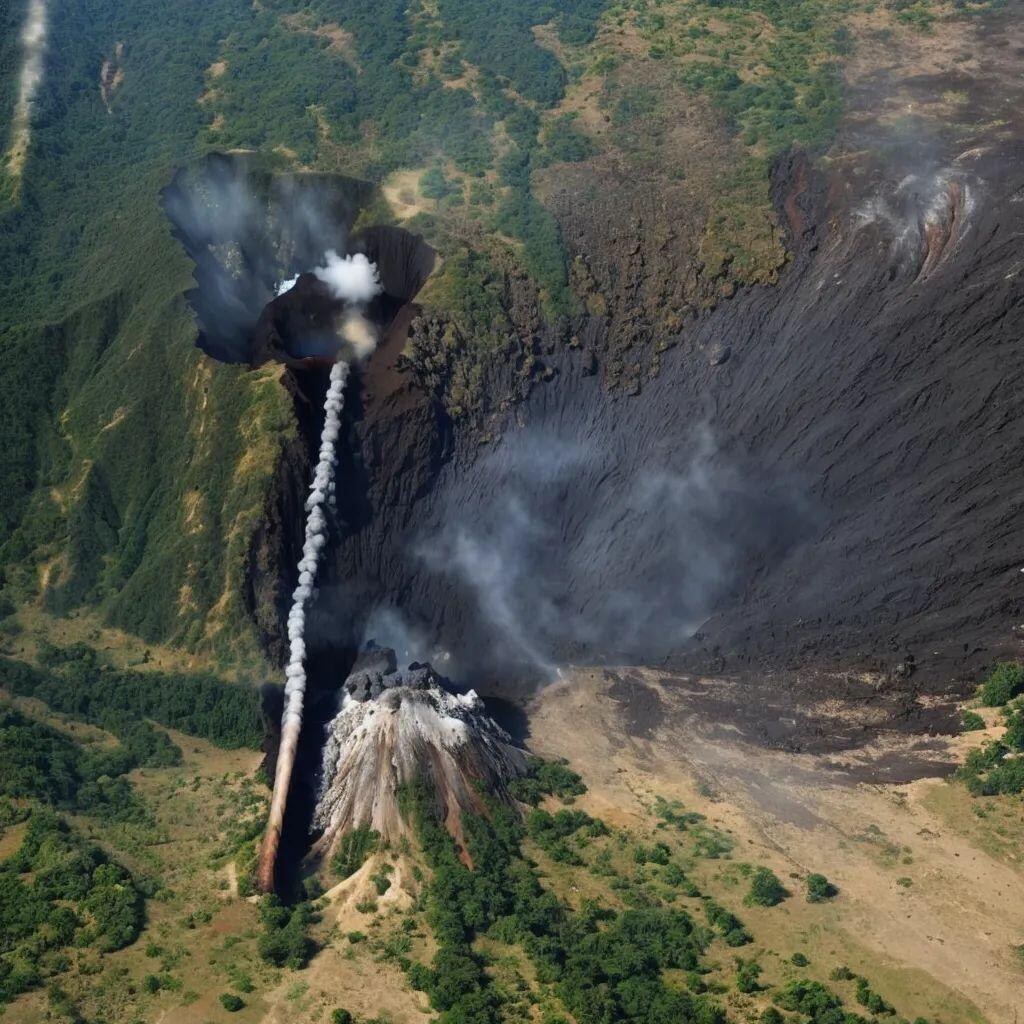
The answer lies in deterrence over firepower, distributed capability over centralized protection, and vigilance toward those who claim to guard you as much as toward external threats.
quoting
naddr1qq…2vemThe defense of autonomous zones begins with a recognition, not with weapons or walls: you have chosen to live outside the state's protection racket.
The libertarian who builds a life in the Second Realm, that parallel world of counter-economic activity operating beyond official permission, purchases independence at a specific price: the state that would tax and regulate him will also decline to protect him. Call it a feature rather than a bug, since the state's protection was always a fiction anyway, a justification for extraction rather than a service. But the departure from official society carries real consequences. In the eyes of the First Realm, the Second Realm is outlaw territory inhabited by outlaws, and that is precisely how other outlaws will see it too.
The temptation is to seek security by recreating familiar structures, to establish some authority within the autonomous zone that can enforce order, adjudicate disputes, and repel invaders. The temptation should be resisted. Every historical attempt to institutionalize protection has ended in the protector becoming the next predator. The state itself began as a protection racket, promising security in exchange for tribute, and that transaction, once accepted, only ever expanded in scope. Any security provider operating within the Second Realm faces identical incentives: to expand its mandate, consolidate its position, and eventually claim the monopoly on force that defines statehood. The very act of purchasing safety creates a new and intimate threat.
The practical question, then, is how communities of individualists can defend themselves without creating the conditions for their own subjection. The answer lies in a disposition toward security that treats preparation as the primary goal and actual conflict as a failure to be minimized, rather than in any particular technology or organizational form.
Peace is the first defense. This observation seems obvious until one watches how many people conduct themselves as though inviting attack. The Second Realm operates through discretion rather than display, through quiet competence rather than aggressive posturing. Those who build parallel institutions succeed by not provoking the forces that would destroy them. They do not brag about their activities. They do not challenge adversaries unnecessarily. They maintain integrity in their dealings because reputation is the only enforcement mechanism available when state courts are off limits. Quietness, honesty, and confidence, combined in proper measure, prevent more conflicts than any arsenal.
But peace is not passivity. Successful defense requires active preparation long before any threat materializes, beginning with the recognition that location and access determine vulnerability more than any other factors. The source of most security failures is inadequate gatekeeping rather than inadequate firepower: the willingness to allow unknown elements into protected spaces without screening, the failure to control the paths by which adversaries might approach. Every competent nightclub operator understands that good bouncers at the door prevent more violence than any number of armed guards inside. The principle scales to any autonomous zone: know who enters, control how they arrive, and maintain awareness of the approaches by which attack might come.
Against the state, the calculus differs fundamentally from defense against ordinary criminals. One does not defeat a modern nation-state through force of arms. The asymmetry is too great, the resources too imbalanced. Those who imagine pitched battles against government forces are entertaining fantasies that will get people killed. Defense against state aggression means delay, deniability, and escape. It means separating evidence from persons at risk, maintaining the ability to relocate operations, and accepting that any fixed installation can eventually be taken. The goal is survival rather than victory, continuity rather than conquest. The Second Realm persists by being too diffuse to crush, too mobile to pin down, and too prepared to surprise.
Against other outlaws, the situation permits more conventional thinking. When a predator calculates whether to attack, they weigh expected gains against expected costs. Security succeeds when it makes that calculation unfavorable. This requires neither overwhelming force nor sophisticated weaponry, only sufficient visible preparation to signal that easier targets exist elsewhere. The elaborate defenses of medieval castles worked not because they could withstand any siege but because besieging them was expensive enough to deter most attempts. The same principle applies to any protected space: make attack costly, deny the possibility of quick victory, ensure that anyone contemplating aggression understands they will pay a price disproportionate to any potential gain.
The deeper problem of defense in individualist communities is coordination. Defense is a numbers game. The size, preparation, and cohesion of forces available determine outcomes more than individual skill or motivation. Effective resistance requires the ability to concentrate strength, to delegate authority in emergencies, and to subordinate personal judgment to collective action when circumstances demand it. For people who have explicitly rejected hierarchical organization, who prize autonomy above nearly every other value, this represents a real philosophical challenge. Individualists must develop, in advance and through careful negotiation, the shared understandings and contingent agreements that allow rapid coordination without permanent subordination. The alternative is being picked off one by one by adversaries who face no such constraints.
Yet even this coordination must carry its own safeguards. Any security provider, even one emerging from within the community, accumulates power through its protective function. The security entrepreneur who successfully defends the autonomous zone gains resources, reputation, and the implicit authority that comes from demonstrated capability. These same assets could be turned against the community if the provider decided to extract rather than protect. The time-tested solution is to ensure that defensive capacity remains distributed, that no single entity possesses enough force to dominate, and that everyone remains willing and able to resist any protector who begins exhibiting predatory tendencies. The vigilance required toward external threats must be matched by vigilance toward those claiming to guard against them.
Call it prudent institutional design rather than paranoia. The question of who watches the watchmen admits no final answer except eternal watchfulness itself. Successful autonomous zones cultivate a culture in which security is everyone's concern rather than a service delegated and forgotten. They maintain distributed capabilities so that the removal of any single node does not collapse the whole. They treat their protectors as service providers subject to competition and replacement rather than as authorities entitled to obedience. Above all, they remember that the goal is liberty, and that survival at the price of subjection to a new master represents no victory at all.
Being prepared, and having adversaries know you are prepared, eliminates most threats before they materialize. The vast majority of security situations in life resolve through deterrence rather than conflict. This is as true for autonomous zones as for nation-states, as true for private clubs as for defended borders. The predator who knows that attack will be costly looks for softer targets. The state that understands it cannot achieve surprise looks for easier prosecutions. The practical work of security consists largely in ensuring that these calculations consistently favor leaving you alone.
The Second Realm will never achieve perfect safety, but neither does the First. The question is not whether risks exist but whether freedom is worth the risks involved in claiming it. For those who find the degradation of the state-dominated world intolerable, who refuse to wait for a revolution that may never come, the answer has already been given. They have chosen to build something worth defending. The work that remains is ensuring that what they build can survive long enough to flourish.